 All posts
Proof of Ownership of a House: Documents and Uses
Learn which documents legally serve as proof of ownership of a house, when you need them, and how to organize your property records securely.
Corey Everett built Arclyst from a background in Library and Information Science, with the goal of bringing structured information management into everyday home life.
Gemini-assisted drafts are reviewed by Corey Everett before publication.
Publisher: EverCreate Studio
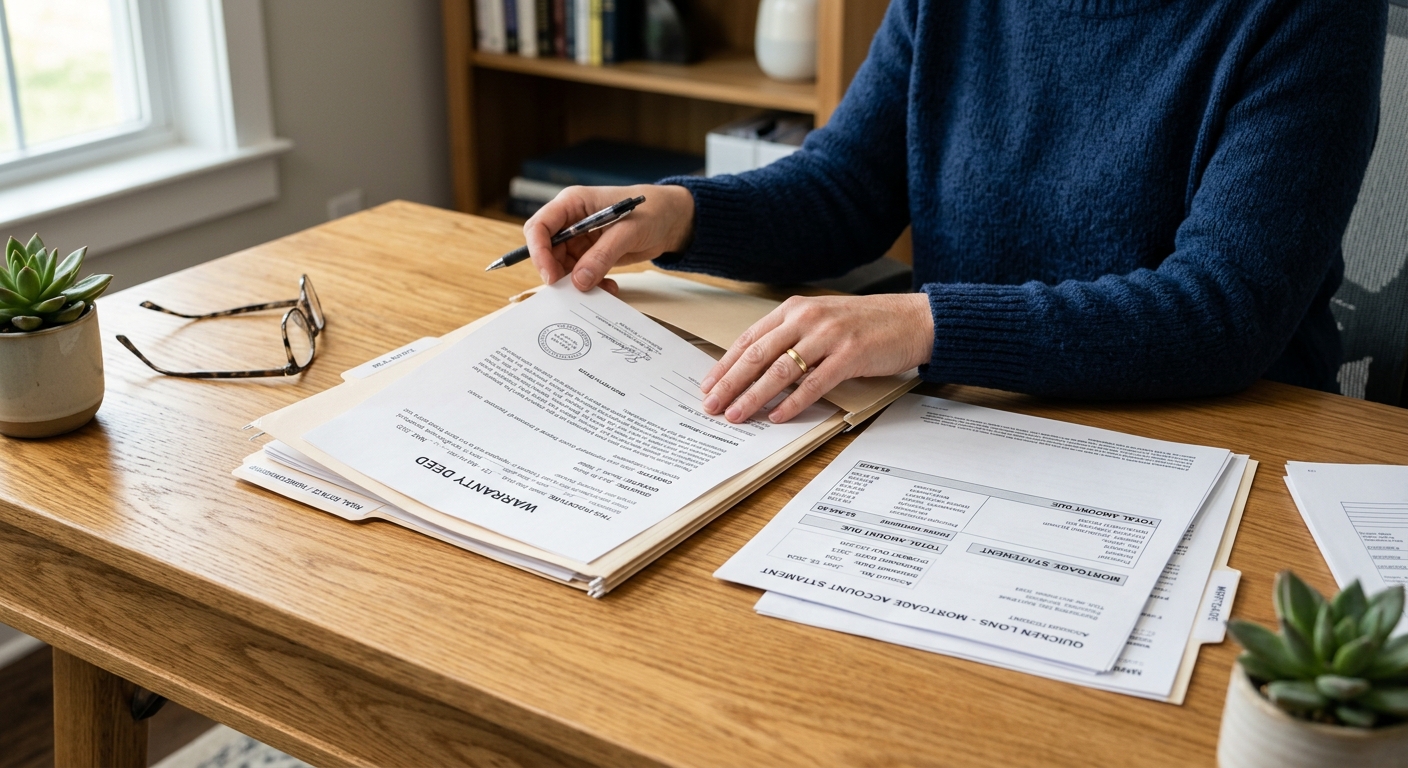
Proof of ownership of a house is legally established by a property deed that has been officially recorded with your local county or municipal government. While you may have a mortgage statement, property tax bills, or utility accounts in your name, the recorded deed is the primary legal document that proves you hold title to the real estate.
Whether you are preparing to sell your home, applying for a building permit, or filing a major insurance claim, having your ownership documents organized prevents costly delays.
Key takeaways
- A recorded property deed is the ultimate legal proof of homeownership; it transfers ownership from the previous owner to you.
- Secondary documents, including property tax receipts, mortgage statements, and homeowners insurance policies, help establish a paper trail of your ownership.
- You will generally need to provide proof of ownership when selling, refinancing, pulling municipal building permits, or resolving property line disputes.
- Store original physical property documents in a fireproof safe or bank deposit box, and maintain secure digital backups.
- Proving you own the house structure requires a deed, but proving you own the belongings inside requires a separate home inventory with receipts and serial numbers.
What documents legally prove you own a house?
Proving you own a piece of real estate requires specific legal documentation. While many documents have your name and address on them, only a few carry the legal weight to prove actual ownership of the property.
The property deed: Your primary proof
Your property deed is the physical legal document that transfers ownership of the real estate from the seller to the buyer. When you close on a house, you sign the deed, which is then sent to the county recorder's office (or equivalent local agency) to be entered into the public record.
Once recorded, the deed is returned to you. This document includes a detailed legal description of the property boundaries and explicitly states who owns the property. If your ownership is ever questioned in a legal setting, the recorded deed is the first and most important document required.
Understanding different types of deeds
Not all deeds offer the same level of protection or proof. The type of deed you hold depends on how you acquired the property:
- General Warranty Deed: This is the most common and secure type of deed for traditional home purchases. It proves you own the house and guarantees that the property is free of any hidden liens or claims from previous owners.
- Special Warranty Deed: Often used in commercial real estate or foreclosures, this proves your ownership but only guarantees that there were no title issues during the time the previous owner held the property.
- Quitclaim Deed: Frequently used when transferring property between family members or into a living trust. It transfers whatever ownership interest the grantor has to you, but it offers no guarantees that the title is free and clear of other claims.
Title certificates and title insurance
While "deed" and "title" are often used interchangeably, they are different concepts. The deed is the physical document; the title is the legal concept of your ownership rights.
When you buy a house, a title company performs a search to ensure no one else has a claim to the property. They then issue a title insurance policy. Your title insurance policy documents serve as strong supporting proof of ownership, as they demonstrate that a legal entity verified your ownership rights at the time of purchase and insured them against future disputes.
Secondary documents that establish a paper trail
While a deed is the definitive legal proof, several other documents serve as practical proof of ownership for everyday administrative tasks. These documents show that you are financially responsible for the property.
Property tax bills and municipal assessments
Local governments assess property taxes and send the bill to the owner of record. A current property tax bill or a receipt showing taxes paid in your name is widely accepted as supporting proof of ownership by homeowners associations, utility companies, and some municipal departments.
Mortgage statements and the deed of trust
If you financed your home, you will receive regular mortgage statements. A mortgage statement proves that you are paying off a loan secured by the property, which strongly implies ownership.
Additionally, depending on your state, you may have signed a Deed of Trust or a mortgage agreement at closing. This document ties the loan to the property and lists you as the borrower/owner, serving as another layer of documentation.
Homeowners insurance policy documents
Your homeowners insurance declarations page lists you as the insured party for the property. Because insurance carriers require you to have an "insurable interest" (meaning you would suffer a financial loss if the house were damaged) to underwrite a policy, an active homeowners policy is a strong indicator of ownership.
Utility bills: Proof of residency vs. ownership
Utility bills (water, gas, electricity) are frequently requested by schools or government agencies, but it is important to note that they generally prove residency, not ownership. A renter can easily have utilities in their name. However, when combined with a tax bill or mortgage statement, utility bills help complete the picture of your ownership and occupancy.
When is proof of house ownership required?
Keeping your property documents accessible is crucial because you will need them for several major life and financial events.
Selling, transferring, or refinancing the property
If you decide to sell your home, the buyer's title company will need to verify your ownership before the transaction can proceed. Similarly, if you refinance your mortgage to get a better rate or pull out equity, the new lender will require proof that you hold clear title to the property.
Applying for building permits and zoning variances
Local municipalities have strict rules about who can authorize changes to a property. If you want to build an addition, install a new roof, or put up a fence, the local building department will generally require proof of ownership before issuing a permit. In many cases, they will look up the recorded deed in their own systems, but having your copy speeds up the process.
Resolving property line and boundary disputes
Disputes with neighbors over fence lines, overhanging trees, or driveway easements are common. Your property deed, specifically the legal description of the property boundaries contained within it, is the required document to resolve these disputes legally. You may also need to present a property survey alongside the deed.
Filing major structural insurance claims
If your home suffers severe damage from a fire, tornado, or other disaster, your insurance carrier will need to verify your ownership before issuing large payout checks for structural repairs. Providing your deed and title information upfront can help prevent delays in the insurance claim guide process.
Proving ownership of the house vs. the contents inside
There is a critical distinction in property documentation: the documents that prove you own the house do nothing to prove you own the belongings inside it.
Why your deed doesn't cover your belongings
If a disaster destroys your home, your homeowners insurance policy generally splits your coverage into two main categories: dwelling coverage (the structure) and personal property coverage (your belongings).
Your property deed and tax records satisfy the adjuster's requirement for the dwelling. However, to claim the loss of your furniture, electronics, and clothing, you must provide separate proof of ownership for those specific items.
Documenting personal property with receipts and serial numbers
To ensure your personal property is protected, you need a detailed home inventory checklist. For high-value items like televisions, computers, and power tools, insurance carriers typically look for specific details to process a claim efficiently:
- Item description: Make, model, and year.
- Purchase records: Receipts, credit card statements, or email invoices.
- Identifying marks: Serials and warranties photographed directly from the device.
Without these details, adjusters may struggle to determine the actual cash value vs replacement cost of your items, potentially leading to lower payouts.
Using visual catalogs for home contents
Creating a manual spreadsheet of every item you own is incredibly tedious, which is why most people never finish one. A more practical approach is to use a visual cataloging system.
Arclyst helps people catalog belongings from photos into searchable records. By taking wide shots of your rooms and close-ups of high-value items and their serial numbers, you can build a comprehensive record of your personal property. This digital record serves as your proof of ownership for your belongings, complementing the physical deed that proves you own the house itself.
How to organize and protect your real estate documents
Because your property deed and supporting documents are so important, they must be protected from physical damage and loss.
Securing physical copies against fire and flood
Never store your original property deed in a standard filing cabinet or desk drawer. If the house burns down or floods, the documents proving you own it could be destroyed alongside it.
- Fireproof and waterproof safes: Store original deeds, title insurance policies, and closing documents in a safe rated for both fire and water protection.
- Safe deposit boxes: For maximum security, keep the original documents in a bank safe deposit box and keep photocopies at home for easy reference.
Creating a digital vault for property records
Physical documents can degrade or be misplaced over time. As soon as you receive your property documents, scan them and create a digital backup.
Store these digital copies in a secure, encrypted cloud storage service. Having immediate access to a PDF of your property deed on your smartphone can save you days of waiting if you need to quickly prove ownership to a contractor, insurance adjuster, or municipal worker.
What happens if you lose your original property deed?
Losing your physical property deed is stressful, but it does not mean you lose ownership of your house. Because deeds are public records, you can always obtain a replacement.
Accessing county recorder and clerk records
When you bought your house, the original deed was recorded with the county clerk, recorder of deeds, or a similar local government office. This office maintains the official public record of all real estate transactions in the jurisdiction.
Requesting certified copies of your deed
If you need a new copy of your deed, you can request a "certified copy" from the county recorder's office.
- Locate the correct office: Search for your county's "Recorder of Deeds" or "County Clerk" online.
- Provide property details: You will generally need to provide the property address, your name, and the approximate date of purchase. If you know your parcel number or property tax ID, that speeds up the search.
- Pay the fee: Most counties charge a small nominal fee (often a few dollars per page) to print and certify the document.
A certified copy carries the same legal weight as the original document for almost all legal and financial purposes.
Next steps for securing your property
Once you have located your property deed, tax records, and insurance policies, place them in a secure physical location and scan them for your digital archives. With the structure of your home legally documented, take an afternoon to walk through your rooms and photograph your high-value belongings, ensuring both your house and everything inside it are fully protected.
Frequently asked questions
Is a mortgage statement proof of ownership of a house?
A mortgage statement alone is not legal proof of ownership; it only proves that you are responsible for repaying a loan associated with the property. However, it serves as strong supporting documentation when combined with a property tax bill or homeowners insurance policy.
What is the difference between a house deed and a title?
A deed is the physical, legal document that transfers ownership from one person to another. Title is the conceptual legal right to own and use the property. You hold the title because your name is on the recorded deed.
Do I need my original deed to sell my house?
No, you generally do not need the physical original deed to sell your house. The title company handling the sale will pull the official recorded deed from the county's public records to verify your ownership.
How can I prove ownership of a house if I lost the receipt or deed?
If you lost your deed, you can request a certified copy from your local county recorder's office. If you are trying to figure out how to prove you owned something when you lost the receipt for personal property inside the home, you can use credit card statements, product manuals, or photos of the items with visible serial numbers.
Does a utility bill prove I own my home?
No. A utility bill proves residency (that you live at the address or manage the utilities there), but it does not prove legal ownership. Renters frequently have utility bills in their own names.
Related guides
Want a frictionless way to catalog what you own? Try Arclyst — free for 55 items. Snap a photo, AI fills in the details.