 All posts
Actual cash value vs replacement cost: why your inventory details matter
Understand actual cash value vs replacement cost for insurance claims. Learn why your home inventory details, receipts, and photos determine your final payout.
Corey Everett built Arclyst from a background in Library and Information Science, with the goal of bringing structured information management into everyday home life.
Gemini-assisted drafts are reviewed by Corey Everett before publication.
Publisher: EverCreate Studio
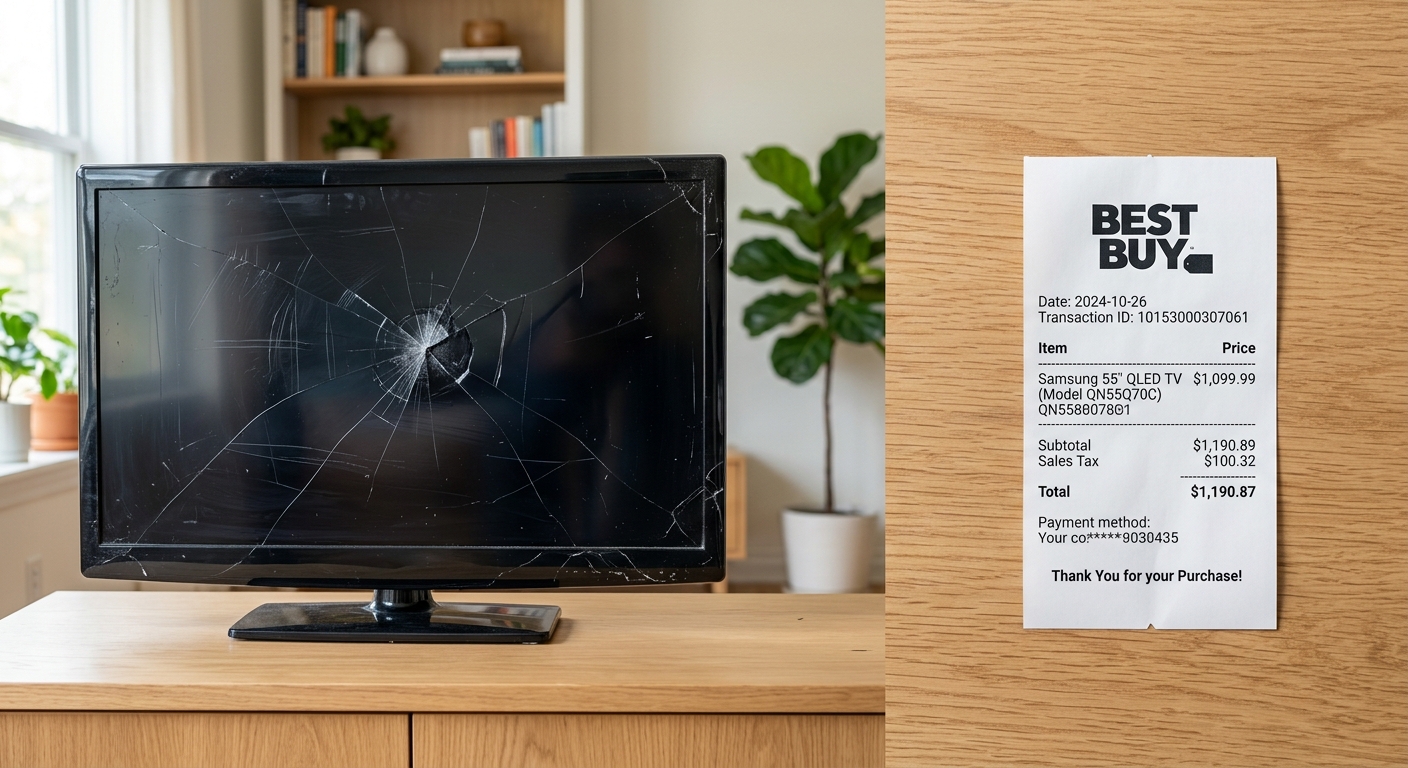
Actual cash value generally accounts for depreciation; replacement cost generally reflects the cost of a comparable new item. Policy terms determine payment.
When you file an insurance claim, the payout you receive depends heavily on three letters in your policy: ACV or RCV. Understanding actual cash value vs replacement cost determines whether you get enough money to buy a new $1,200 espresso machine or just a $300 check for a depreciated appliance. The difference usually comes down to your policy type and how well you documented the item before the loss.
TL;DR
- Replacement Cost Value (RCV) pays what it costs to buy a brand-new version of your lost item today, without deducting for age.
- Actual Cash Value (ACV) pays the item's current value, which means the replacement cost minus depreciation for age and wear.
- Insurance adjusters use standard depreciation tables, but proof of excellent condition can sometimes reduce the depreciation penalty.
- Without detailed proof of ownership (receipts, model numbers, purchase dates), insurers default to the lowest-priced comparable item.
- Documenting your belongings with a home inventory checklist before a disaster is the only reliable way to guarantee an accurate valuation.
Disclaimer: Insurance policies vary widely by provider and state. The information below is for educational purposes. Always review your specific declarations page and consult your insurance agent regarding your coverage terms.
What is Actual Cash Value (ACV)?
Actual cash value generally means replacement cost less depreciation, subject to the policy's valuation terms.
Actual cash value is a common default valuation method for personal property insurance. It represents the fair market value of an item at the exact moment it was damaged, destroyed, or stolen.
To calculate ACV, an insurance adjuster determines what it would cost to buy the item new today, then subtracts depreciation based on the item's age and expected lifespan. If you lose a five-year-old leather sofa, an ACV policy will not pay for a new one. It pays what a five-year-old used sofa is worth on the open market.
Consider a $2,000 laptop destroyed in a fire. If standard depreciation tables assign that laptop a five-year lifespan, it loses 20% of its value every year. If the laptop is four years old, it has depreciated by 80%. Your ACV payout would be just $400, leaving you to cover the remaining $1,600 to buy a new equivalent model.
What is Replacement Cost Value (RCV)?
Replacement cost value ignores depreciation. An RCV policy covers the actual cost to purchase a brand-new replacement of similar kind and quality at today's retail prices.
If that same four-year-old laptop is destroyed, an RCV policy pays the full retail price to buy a comparable new laptop. However, insurers rarely hand over the full replacement amount upfront. The process usually involves two steps to prevent fraud.
First, the insurer issues an initial check for the actual cash value (in this case, $400). You then go to the store, purchase the new $2,000 laptop, and submit the receipt to your adjuster. Once the purchase is verified, the insurer releases a second check for the remaining $1,600. This second payment is known as recoverable depreciation.
Extended and Guaranteed Replacement Cost
For the physical structure of your home (the dwelling coverage), you might encounter two upgraded versions of RCV:
- Extended Replacement Cost: This pays to rebuild your home even if costs exceed your policy limit, usually capping at 120% to 150% of the limit. This protects you against sudden spikes in construction materials and labor after a widespread natural disaster.
- Guaranteed Replacement Cost: This pays whatever it costs to rebuild your home to its original specifications, with no percentage cap. This is the highest level of protection available, though it is less common and carries higher premiums.
ACV vs. RCV: A Practical Comparison
| Feature | Actual Cash Value (ACV) | Replacement Cost Value (RCV) |
|---|---|---|
| Payout Basis | Current market value (cost minus depreciation) | Current retail price of a new, similar item |
| Premiums | Generally lower | Generally higher |
| Out-of-Pocket Costs | High (you pay the difference to buy new) | Low (you only pay your deductible) |
| Depreciation | Deducted from final payout | Deducted initially, but refunded after purchase |
| Claim Process | Simpler (one check issued) | Requires submitting receipts for the second check |
| Best For | Budget-conscious renters or older items | Maximum financial protection against total loss |
How Insurance Depreciation Actually Works
Insurance companies do not guess how much an item has depreciated. They use standardized depreciation tables that assign a specific lifespan to different categories of personal property.
Certain categories of items depreciate much faster than others:
- Electronics and Computers: These items become obsolete quickly. A smartphone or laptop might lose 20% to 30% of its value annually.
- Clothing and Footwear: Everyday apparel depreciates rapidly due to daily wear and tear, often losing 15% to 20% of its value per year.
- Furniture and Appliances: These have longer lifespans. A solid wood dining table might depreciate at just 3% to 5% per year, while a refrigerator might depreciate at 7% to 10% per year.
Adjusters also factor in the condition of the item before the loss. This is where your documentation becomes critical. If you can prove an item was in pristine condition or recently refurbished, you can often negotiate a lower depreciation rate. A ten-year-old bicycle with documented recent upgrades and brand-new tires should not be depreciated at the same rate as a neglected bike rusting in a shed.
Why Your Home Inventory Details Dictate Your Payout
When you submit a schedule of loss, vague descriptions cost you money. If you list "toaster" on your claim form, the adjuster will price out the cheapest $15 pop-up toaster available at a big-box store. If you list "power drill," you will get the valuation for a $30 generic brand, not your $150 DeWalt 20V Max XR Brushless drill.
To get an accurate valuation—whether you have ACV or RCV—you must prove exactly what you owned. Detailed documentation forces the insurer to price out the correct replacement. Read our insurance claim guide for a deeper look at the claims process.
Model Numbers and Specifications
Model numbers prove the exact tier of a product. A "Samsung TV" could be a $200 entry-level LED or a $3,000 flagship OLED. The model number dictates the replacement cost baseline before any depreciation is calculated. Without it, the adjuster has to guess, and they will usually guess in favor of the insurance company.
Purchase Dates and Receipts
Purchase dates establish the exact age of the item. If you cannot prove when you bought an item, adjusters may estimate its age unfavorably. Receipts also prove your original purchase price and establish unquestionable proof of ownership. If you claim a $4,000 custom sofa but have no receipt, the insurer may demand further proof before approving the valuation.
Condition Photos
A photograph taken before the loss proves the item existed in your home and shows its condition. A clear photo of a scratch-free dining table or a meticulously maintained lawnmower serves as objective evidence when arguing against excessive depreciation deductions.
How to Document Your Inventory for Maximum Valuation
Creating a detailed inventory requires capturing specific data points for every valuable item in your home. Follow this process to ensure your documentation holds up during a claim:
- Capture the item: Take a clear, well-lit photo of the item in its normal location. This proves the item was actually in your residence.
- Zoom in on identifiers: Photograph the serial number, make, and model number plates. These are usually found on the back or bottom of electronics and appliances.
- Digitize the paperwork: Photograph or scan the original receipt, warranty card, or appraisal document. Keep these associated with the item's primary photo.
- Record the details: Log the purchase date, purchase price, and a brief description of the item's condition.
- Store it off-site: Keep this data in a secure, cloud-based system. A physical notebook inside your house is useless if the house burns down.
Using an AI-powered tool can speed up this process. Instead of typing out long serial numbers, you can photograph the manufacturer label and let the software extract the text and categorize the item automatically.
FAQ
Do I get the replacement cost money upfront?
No. Even with an RCV policy, insurers typically issue an initial payment for the actual cash value. You must then purchase the replacement item and submit the new receipt to claim the remaining balance, known as recoverable depreciation.
What happens if my exact item is no longer manufactured?
If your specific model is discontinued, the insurance adjuster will find a currently available item of "like kind and quality." This means a product with similar materials, features, and functionality. Detailed specifications from your inventory help ensure the replacement matches the quality of the original.
Can I use my RCV payout to buy a different brand or upgrade?
Yes. You are not forced to buy the exact same brand. However, the insurance company will only reimburse you up to the replacement cost of your original item. If your original TV costs $500 to replace, but you decide to buy a $1,000 TV, the insurer will only pay $500. You cover the difference.
Does renters insurance use ACV or RCV?
Renters insurance policies can use either method. Many basic policies default to actual cash value to keep premiums low. You usually have to specifically request and pay slightly more for a replacement cost endorsement on your personal property.
How are antiques and collectibles valued?
Standard ACV and RCV rules do not work well for antiques, fine art, or rare collectibles because these items often appreciate in value rather than depreciate. To properly cover these items, you usually need a scheduled personal property rider, which requires a professional appraisal to establish an agreed value before a loss occurs.
How do I prove the condition of an item destroyed in a fire?
The only reliable way to prove condition after a total loss is with prior documentation. High-resolution photos or video walkthroughs taken before the disaster serve as objective evidence of how well an item was maintained.
Secure Your Proof of Ownership
Filing a claim is stressful enough without having to fight an adjuster over the value of your belongings. The best way to ensure a fair actual cash value or replacement cost payout is to have undeniable proof of what you owned, exactly what model it was, and what condition it was in.
Arclyst makes building a detailed home inventory fast and practical. Just photograph your items, and our AI helps identify, describe, and categorize them by room. The free tier includes up to 55 items and 15 AI scans per day. Paid tiers unlock unlimited items, high-definition scans, and a PDF Claim Pack export designed specifically to hand over to insurance adjusters.
Stop relying on memory for your most valuable assets. Start free at arclyst.org and document your home today.
Related guides
Want a frictionless way to catalog what you own? Try Arclyst — free for 55 items. Snap a photo, AI fills in the details.