 All posts
What renters forget to document before an insurance claim
Discover the everyday items renters forget to document before a claim. Learn how to build a complete renters insurance inventory and prove ownership.
Corey Everett built Arclyst from a background in Library and Information Science, with the goal of bringing structured information management into everyday home life.
Gemini-assisted drafts are reviewed by Corey Everett before publication.
Publisher: EverCreate Studio
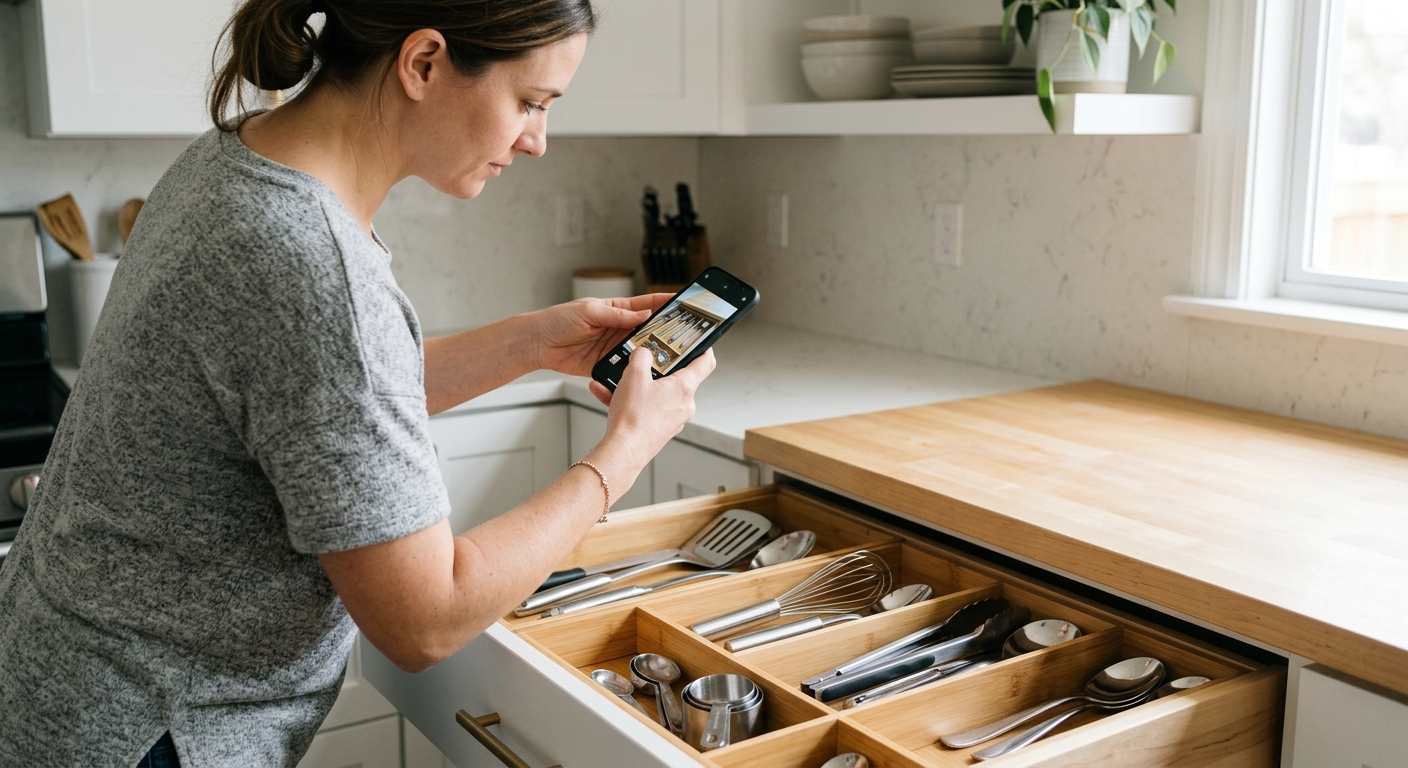
A renters insurance inventory records personal belongings, including everyday items that are easy to overlook. It supports documentation, not guaranteed coverage.
Most renters document their laptop, TV, and maybe a gaming console before calling their inventory complete. But when a fire or severe water leak forces you to replace everything, the bulk of your claim will actually come from the hundreds of boring, everyday items you forgot to record. A solid renters insurance inventory captures the full value of your apartment, right down to the spices in your pantry and the shoes in your closet.
TL;DR
- High-value electronics are rarely forgotten, but everyday items like cookware, linens, and clothing often make up the largest portion of a renters insurance claim.
- Insurance adjusters require specific proof of ownership for renters insurance; vague descriptions like "clothes" will result in minimum payouts based on generic brands.
- Documenting forgotten categories—like cleaning supplies, tools, and bathroom toiletries—can add thousands to your total claim value.
- Using a room-by-room approach with photo documentation is the most efficient way to build an apartment insurance checklist.
The hidden cost of an undocumented apartment
When you file a total loss claim, the insurance adjuster does not guess what was in your apartment. They rely entirely on your documentation. If you list "pots and pans," the adjuster will price out the cheapest generic set available at a big-box store. If you list a "10-piece All-Clad D3 stainless steel cookware set," you receive the replacement cost for that specific brand.
The financial gap between generic estimates and accurate replacement costs is massive. Renters often underestimate how much it costs to replace a fully stocked apartment from scratch. While you might immediately notice the loss of a $1,200 MacBook, you might overlook the $1,500 worth of kitchen gear, $800 in cleaning supplies, and $2,000 in cosmetics you accumulated over five years.
Understanding how your policy pays out is critical here. If you have a Replacement Cost Value (RCV) policy, your insurer pays what it costs to buy a brand-new version of your lost item today. If you have an Actual Cash Value (ACV) policy, they pay the depreciated value of the item based on its age. In both scenarios, failing to document the specific brand and model of your belongings guarantees you will receive the lowest possible estimate.
Which everyday belongings should renters remember to document?
Document kitchen supplies, clothing and other everyday belongings alongside high-value electronics, using the category checklist below.
1. Cookware and pantry staples
A kitchen is one of the most expensive rooms to replace. Renters remember the microwave but forget the contents of the cabinets. Spices, high-quality olive oils, baking supplies, and specialty ingredients add up fast. A single drawer of good kitchen knives, spatulas, measuring cups, and a garlic press can cost hundreds of dollars to replace. Do not forget to document your matching flatware sets, glassware, water filters, and food storage containers.
2. Clothing and seasonal gear
Most people remember to document their expensive winter coats or designer jackets. They forget the sheer volume of everyday clothing they own. Underwear, socks, gym clothes, pajamas, and specialized workwear represent a massive financial investment. If you own 15 t-shirts that cost $20 each, that is $300 sitting in a single drawer. Documenting your closet by counting items and noting brands ensures you do not get a flat, low-ball payout for "miscellaneous apparel."
3. Shoes and footwear
Footwear is frequently under-reported on a renters insurance inventory. A standard closet might hold running shoes, formal dress shoes, winter boots, sandals, and casual sneakers. Specialty footwear like cycling shoes or hiking boots are particularly expensive to replace. Photographing your shoe rack and noting the brands provides undeniable proof of ownership for items that routinely cost $50 to $200 per pair.
4. Cosmetics, skincare, and toiletries
The bathroom cabinet holds a high density of value in a very small space. Serums, perfumes, makeup palettes, electric toothbrushes, and hair styling tools are expensive to replace all at once. A single bottle of high-end cologne or prescription skincare can cost over $100. Because these items are small and consumable, renters rarely keep receipts. A quick photo of your open bathroom drawers is essential.
5. Tools and hardware
You do not need a garage to own valuable tools. Apartment dwellers often have cordless drills, comprehensive hand tool kits, picture-hanging hardware, and bike repair gear tucked into hall closets. Even basic items like a heavy-duty tape measure, a set of screwdrivers, and a high-lumen flashlight add up. These items are highly standardized, making them easy to price if you have a clear photo of the brand and model.
6. Books, hobbies, and media
Physical media and hobby supplies are easy to overlook until they are gone. College textbooks, board game collections, vinyl records, and crafting supplies hold significant value. Fitness equipment like yoga mats, dumbbells, and resistance bands also belong in this category. A wide photo of your bookshelf or hobby storage bin is usually enough to establish what you owned.
7. Small appliances
You probably remembered the television, but what about the air purifier in the bedroom? Humidifiers, space heaters, high-end coffee makers, burr grinders, blenders, and robot vacuums are scattered throughout the average apartment. Clothing irons and handheld steamers also fall into this category. These items require specific brand and model documentation to ensure accurate replacement value.
8. Cleaning supplies and household goods
Replacing every mop, broom, vacuum filter, trash can, and bottle of laundry detergent in your apartment is surprisingly expensive. A quality stainless steel kitchen trash can alone can cost $100. While you do not need to document every single sponge, taking a photo of your utility closet or under-sink storage proves the volume and quality of household goods you maintain.
9. Linens, bedding, and towels
Textiles are a hidden expense in any apartment. A quality mattress protector, two sets of high-thread-count sheets, a duvet insert, and a duvet cover can easily exceed $400. Add in four bath towels, hand towels, washcloths, dish towels, and a bath mat, and the replacement cost climbs higher. Documenting the tags on your linens helps prove their quality.
10. Rugs, curtains, and decor
Window treatments and floor coverings are rarely cheap. Blackout curtains, sheer panels, and the tension rods that hold them up are all claimable items. Area rugs, even synthetic ones, represent a significant purchase. Do not forget to document framed posters, wall mirrors, table lamps, and throw pillows, which collectively cost hundreds of dollars to replace.
11. Luggage and travel gear
Suitcases, duffel bags, and backpacks spend most of their time hidden under beds or on the top shelves of closets. A hard-shell carry-on bag and a set of packing cubes can cost $200 or more. Laptop sleeves, briefcases, and everyday purses should also be included in your inventory.
12. Storage unit items
Many renters insurance policies cover items kept in off-site storage units, usually up to a certain percentage of your total coverage limit. Renters frequently forget to inventory these spaces because they are out of sight. Holiday decorations, off-season clothing, camping gear, and inherited furniture kept in storage need the same documentation as the items inside your apartment.
Quick reference: Forgotten items and proof of ownership
| Often forgotten item | Why it matters | Best proof to capture |
|---|---|---|
| Spice rack & pantry | High replacement cost for full restock | Wide photo of open cabinets |
| Everyday clothing | Volume adds up to thousands of dollars | Photos of open drawers, brand tags |
| Cosmetics & perfumes | High value density in small bottles | Close-up photo of vanity or drawer |
| Power tools | Easy to under-price without model numbers | Photo of tool with visible serial/model |
| Small appliances | Generic payouts are much lower than name brands | Photo of manufacturer label |
| Cleaning supplies | Hidden cost of setting up a new home | Photo of utility closet or under sink |
| Bedding & towels | High-quality textiles are expensive to replace | Photo of linen closet and fabric tags |
| Luggage & bags | Often hidden out of sight in closets | Photo of suitcases with brand logos visible |
How to establish proof of ownership for renters insurance
Insurance companies require evidence that you actually owned the items you are claiming. While original receipts are the gold standard, they are not the only acceptable proof. Bank statements, credit card histories, and warranty registration emails are all valid forms of documentation.
When paper trails are missing, photographic evidence is your best backup. A clear photo showing the item in your apartment, ideally with the brand name or serial number visible, is usually sufficient for an adjuster. If you have absolutely no proof of an item, you can sometimes submit a sworn affidavit, though adjusters will scrutinize undocumented high-value claims heavily. For a deeper look at what adjusters expect, review our insurance claim guide.
A 4-step process to build your apartment insurance checklist
Building a comprehensive inventory sounds exhausting if you try to write everything down on a legal pad. The most efficient method is a structured, room-by-room photographic sweep.
Step 1: Capture the wide angles Stand in the doorway of a room and take a photo of each wall. This establishes the baseline layout of the room and captures large furniture, rugs, and wall art.
Step 2: The drawer-by-drawer sweep Open every drawer, closet, and cabinet. You do not need to organize the items perfectly. Simply pull open a drawer, ensure the contents are visible, and take a clear overhead photo. Do this for your kitchen cabinets, bathroom vanity, and bedroom dressers.
Step 3: Document high-value serial numbers For electronics, expensive appliances, and power tools, flip the item over and photograph the manufacturer sticker. This sticker contains the exact model number and serial number, which guarantees an accurate replacement cost estimate.
Step 4: Digitize and store off-site Keeping a physical list of your belongings inside your apartment is useless if a fire destroys the apartment. Your inventory must live in the cloud.
This is exactly what Arclyst is built for. Instead of typing out descriptions for every pair of shoes or small appliance, you simply photograph your items. The app uses AI to identify the object, generate a description, and categorize it by room. It turns a weekend chore into a fast, manageable process. You can follow a structured home inventory checklist to ensure you do not miss any corners of your apartment. If you have warranties or digital receipts, you can attach them directly to the item's profile for safekeeping.
FAQ
Does renters insurance cover items stored outside my apartment?
Yes, most standard renters insurance policies cover your personal property anywhere in the world. This includes items in a storage unit, luggage lost while traveling, or a laptop stolen from your car. However, coverage for off-premises items is often capped at a percentage of your total personal property limit, typically around 10%.
How detailed does my proof of ownership need to be?
For high-value items like electronics, jewelry, or musical instruments, you need the brand, model number, serial number, and purchase price. For everyday items like clothing or cookware, a clear photograph showing the volume and general brand quality is usually enough for an adjuster to estimate replacement cost.
What if I do not have receipts for my belongings?
Lack of receipts will not ruin your claim. Insurance adjusters accept alternative proof of ownership, including photographs, videos, credit card statements, owner's manuals, and warranty emails. Visual evidence of the item inside your home is highly effective.
Does my renters insurance cover my roommate's belongings?
No. Standard renters insurance policies only cover the policyholder and immediate family members living in the unit. Roommates must purchase their own separate renters insurance policies to protect their personal property.
What is the difference between actual cash value and replacement cost?
Actual Cash Value (ACV) pays you the current, depreciated value of an item. If your five-year-old TV is destroyed, an ACV policy pays what a five-year-old used TV is worth today. Replacement Cost Value (RCV) pays exactly what it costs to buy a brand-new version of that same TV at today's retail prices. RCV policies cost slightly more per month but offer significantly better protection.
How often should I update my renters inventory?
You should update your inventory once a year or immediately after a major life event. Moving to a new apartment, moving in with a partner, or making a significant purchase like a new computer or furniture set are all critical times to refresh your documentation.
Stop guessing what you own
A total loss is stressful enough without having to rely on your memory to rebuild your life. Documenting your apartment thoroughly ensures you get the exact replacement value you pay for in your monthly premiums.
Arclyst makes capturing your belongings fast and organized. You can snap photos of your items, and our AI helps identify, describe, and organize them securely. You can start free at arclyst.org to document up to 55 items and run 15 AI scans per day at no cost.
Related guides
Want a frictionless way to catalog what you own? Try Arclyst — free for 55 items. Snap a photo, AI fills in the details.