 All posts
How to document your entire apartment in under 30 minutes
Create a fast renters inventory and document belongings for insurance claims. Learn how to build a complete apartment inventory list in under 30 minutes.
Corey Everett built Arclyst from a background in Library and Information Science, with the goal of bringing structured information management into everyday home life.
Gemini-assisted drafts are reviewed by Corey Everett before publication.
Publisher: EverCreate Studio
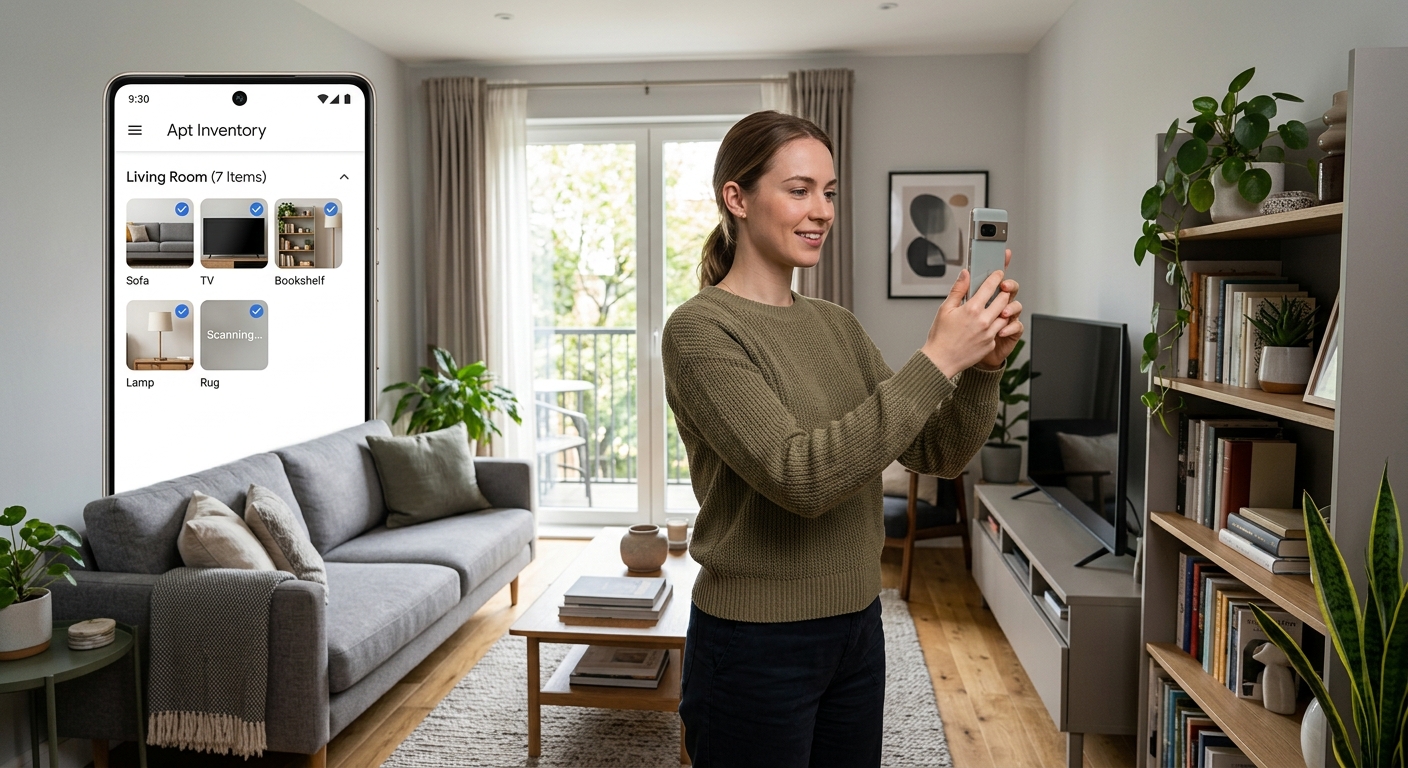
An apartment inventory list records your belongings by room. A short photo sweep provides a starting point for adding item details later.
Renters insurance only protects your belongings if you can prove what you owned before a fire or theft. Most tenants put off creating an apartment inventory list because it feels like a weekend-killing chore. You can document a standard one- or two-bedroom apartment in under 30 minutes using a structured, room-by-room approach.
TL;DR
- Group your apartment into scanning zones (living room, kitchen, bedroom) to avoid backtracking.
- Focus on high-value items first, like electronics, specialized kitchen gear, and expensive furniture.
- Capture wide room shots to establish context, then take close-ups of serial numbers and brand tags.
- Use a digital tool to automate the categorization and sorting process.
- Store your final list in the cloud so it survives any physical damage to your apartment.
The reality of renters insurance claims
When disaster strikes, the burden of proof falls entirely on you. The Insurance Information Institute (III) notes that having a comprehensive home inventory makes filing a claim significantly faster and easier. Without an inventory, you must rely on memory to list every lost item, from your $1,200 laptop to your $40 toaster.
Memory fails during stressful situations. After a fire or severe water leak, recalling the exact brand of your coffee maker or the model number of your television is nearly impossible. Insurance adjusters require specific details—brands, models, purchase dates, and estimated values—to process a payout accurately. Building an apartment inventory list now guarantees you receive the full value of your policy rather than a depreciated estimate based on generic replacements.
A fast renters inventory acts as your financial safety net. It removes the guesswork from the claims process and prevents insurers from undervaluing your possessions. Most policies offer replacement cost coverage, but you only get the funds to buy a new item if you can prove the quality of the destroyed item.
Prep work for a speedy inventory
To finish in half an hour, you need a system. Wandering aimlessly from the TV to the blender to the closet wastes time and guarantees you will miss important items. Treat this like a focused sweep. Proper preparation shaves minutes off the actual documentation phase.
1. Open everything up
Walk through your apartment and open all closet doors, kitchen cabinets, and dresser drawers. You want zero friction when you start documenting. Having everything visible allows you to capture bulk items quickly without stopping to pull handles or dig through boxes.
2. Optimize the lighting
Turn on all the lights and open the blinds. Good lighting is critical for a fast renters inventory. If your photos are dark or blurry, insurers will reject them as proof of ownership. Bright lighting ensures serial numbers, brand names, and condition details remain legible in your photos.
3. Stage your high-value items
Pull expensive items out of deep storage. If you keep expensive camera gear in a hard case under the bed, bring it out and open the case. If you have a collection of high-end sneakers in boxes, pull them out so the logos are visible. Staging these items beforehand prevents you from breaking your momentum later.
How do you start a room-by-room apartment inventory?
Photograph each room, then capture close-ups and identifying details for your priority belongings.
Work methodically from the front door to the back of the apartment. Spend about 4-5 minutes per room. Do not stop to type in details, look up prices, or sort photos yet. Just capture the raw visual data.
The Living Room (5 minutes)
Start with a wide establishing shot from the corner of the room. This captures the entire space and proves the items were actually in your apartment. Next, scan the big-ticket items. Photograph your TV, sound system, couch, and major appliances.
Flip electronics around to photograph the serial number and model sticker. For furniture, take a clear photo of the item and a close-up of any manufacturer tags if accessible.
The Kitchen (5 minutes)
Kitchens hold a surprising amount of value. Take an establishing shot, then focus on countertop appliances. Photograph your espresso machine, stand mixer, microwave, and blender. Capture the brand names and model numbers clearly.
For cabinets and drawers, take single overhead shots. One clear photo of an open utensil drawer or a cabinet full of plates is sufficient for standard items. Adjusters generally accept bulk estimates for everyday kitchenware.
The Bedroom and Closet (10 minutes)
Take your establishing shot. Photograph your mattress brand tag, bed frame, and any electronic items like a secondary television or expensive air purifier.
Closets take the most time. Do not document individual t-shirts. Instead, photograph your closet in sections. Take wide shots showing the volume of clothing. Then, pull out high-value items—designer shoes, tailored suits, expensive winter coats, and luxury handbags. Photograph the brand labels and overall condition of these specific items.
The Bathroom and Hallways (5 minutes)
Bathrooms are fast. Photograph expensive electric toothbrushes, high-end hair dryers, or specialized grooming tools. Take a bulk shot of your medicine cabinet and under-sink storage. For hallways, photograph any valuable art, rugs, or decorative furniture.
High-priority items to document
Not everything requires a dedicated close-up. Focus your 30 minutes on items that cost the most to replace. Review our insurance claim guide for more details on exactly what adjusters look for.
| Category | Examples | Documentation needed |
|---|---|---|
| Electronics | Laptops, TVs, gaming consoles, tablets | Serial numbers, model numbers, brand |
| Furniture | Sofas, mattresses, dining sets | Brand tags, overall condition |
| Kitchenware | Stand mixers, espresso machines, blenders | Brand, model number |
| Apparel | Designer shoes, winter coats, suits | Brand labels, quantity |
| Hobbies | Bicycles, musical instruments, golf clubs | Serial numbers, custom modifications |
Choosing the right inventory method
The tool you use dictates how fast you can document belongings. Relying on outdated methods will stretch this 30-minute task into a multi-day project.
The Pen and Paper Method: Slow and risky. A physical notebook can burn in a fire or get ruined in a flood. It also lacks photographic evidence, which insurers heavily prefer when verifying high-value claims.
The Spreadsheet Method: Better, but tedious. You must manually type every brand, model, and estimated value into a grid, then match those rows to a separate folder of photos. This takes hours. Check our home inventory checklist to see the sheer volume of data required for a manual spreadsheet.
The AI App Method: The fastest option. You take photos, and the software identifies the object, extracts text like serial numbers, and assigns it to a room automatically. This method handles the data entry for you, allowing you to hit the 30-minute mark easily. You can see how this works in our interactive demo.
Maintaining your fast renters inventory
Your apartment inventory list is a living document. You continually buy new things and throw old things away. An outdated list leaves you underinsured.
Set a calendar reminder every six months to update your records. More importantly, build a micro-habit for new purchases. When you buy a new piece of expensive tech or furniture, take two minutes to scan it immediately before throwing the box away. The box often contains the clearest printing of the serial number and model information. Capturing this data immediately ensures your inventory is always current.
FAQ
Do I need to document every single pair of socks?
No. For low-value items like basic clothing, books, or standard kitchen utensils, group them together. Take a single photo of your open closet or utensil drawer. Adjusters generally accept bulk estimates for standard household goods.
How do I document items I bought years ago without receipts?
Take clear photos of the item, focusing on the brand name and model number. Most insurers accept photographic evidence of possession. They will calculate the current replacement cost based on the model and condition shown in the photos.
Is a video walkthrough better than photos?
A video walkthrough is a great starting point to establish context, but it often moves too fast to capture serial numbers or brand tags clearly. Insurers prefer high-resolution photos for high-value items to verify exact models and conditions.
Where should I store my inventory list?
Always store your inventory off-site. Cloud storage or a dedicated mobile app ensures your records survive even if your phone and apartment are destroyed in a fire or flood.
Arclyst uses AI to automatically categorize your photos by room, helping you finish your inventory in record time. You can start free at arclyst.org, download the Android version from the Google Play Store, or read what users are saying about us on AlternativeTo.

Related guides
Want a frictionless way to catalog what you own? Try Arclyst — free for 55 items. Snap a photo, AI fills in the details.